
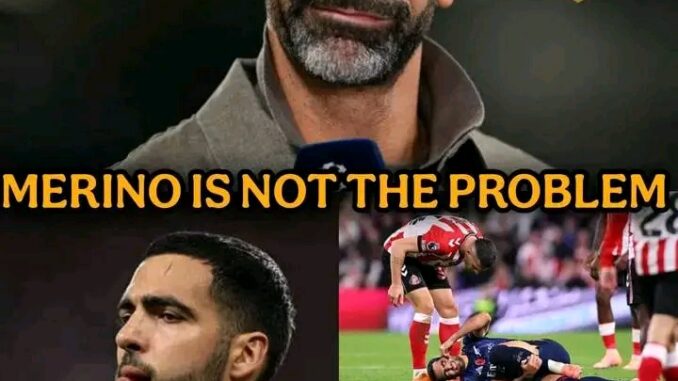
In the intense world of Premier League football, every fixture tells a story—of brilliance, blunders, and the thin line between the two. Arsenal’s recent battle with Sunderland exposed cracks in their defense that couldn’t be ignored. Despite the team securing a 3-1 win, the spotlight quickly turned to one man: Gabriel Magalhães. While many fans pointed fingers at Mikel Merino, Rio Ferdinand stepped in with a different perspective, insisting Merino wasn’t to blame at all.
Ferdinand, never one to mince words, dissected the game with the precision of a surgeon. He made it clear that Magalhães’ display was subpar for a player of his reputation. Arsenal might have bagged the three points, but their defensive line looked alarmingly fragile, and Magalhães’ uncertain decisions made Sunderland’s attacks look far more threatening than they should’ve been.
Throughout the ninety minutes, Ferdinand noticed something deeply troubling—Magalhães seemed lost in key moments. His positioning was off, his communication lagged, and the connection between him and his defensive partners seemed to flicker rather than flow. This disorganization, Ferdinand said, opened up gaps that Sunderland exploited with ease, forcing Arsenal’s keeper into unnecessary scrambles.
There was one glaring moment that summed it all up. Magalhães drifted out of position, leaving a massive hole in Arsenal’s backline. Sunderland capitalized instantly, slicing through and crafting a dangerous chance. Ferdinand emphasized that in England’s top flight, such lapses can’t go unpunished—teams at this level will always pounce when defenders switch off, even for a heartbeat.
Beyond tactics, Ferdinand touched on the mental strain defenders face when representing a club of Arsenal’s stature. With thousands of eyes watching and expectations towering, even the smallest misstep can feel monumental. For Magalhães, the pressure to perform doesn’t just come from his manager or fans—it’s baked into the badge on his shirt.
The Brazilian has proven himself capable in previous matches, showing the grit and athleticism that once earned him praise. Yet Ferdinand’s critique wasn’t meant to tear him down—it was a wake-up call. The message was simple: consistency is the heartbeat of any great defender, and right now, Magalhães’ rhythm is offbeat.
As the season unfolds, Arsenal can’t afford repeated defensive slip-ups if they intend to chase trophies. They’ll need Magalhães to find his composure, command his zone, and rebuild trust with his teammates. Ferdinand’s analysis may have stung, but it carried truth—a truth that could sharpen Magalhães into the player Arsenal needs him to be.
In the end, it wasn’t Merino who faltered, but Magalhães who momentarily lost his edge. The criticism, though harsh, serves as both a warning and an opportunity. Arsenal’s path to glory will demand more than goals; it’ll require defenders who stay unshaken when the pressure mounts—and for Gabriel, redemption begins the moment he learns from this bruising lesson.
Leave a Reply